
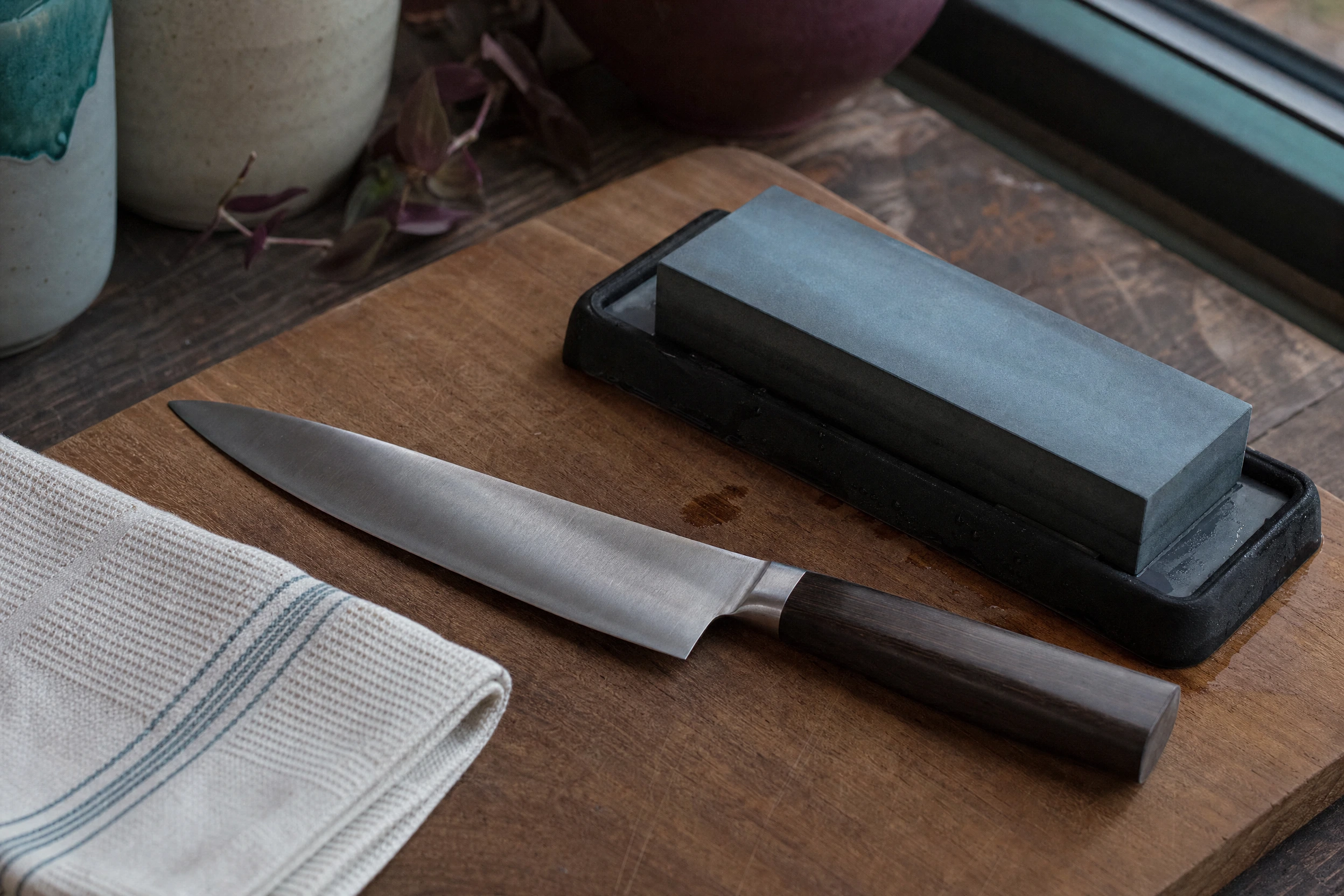
Start with the knife you already use
A knife can still feel comfortable in your hand while its cutting performance no longer feels familiar. Before shopping for a replacement, consider whether edge maintenance is the real issue. The answer depends on the blade’s condition and the kind of work it needs.
There is no need to turn a kitchen drawer into a collection project. Look first at the knife you reach for most often, and decide whether you want to keep using it.
Explore Mail-in knife sharpening service Commercial link · opens a new tab
Maintenance, repair or replacement?
Routine edge work and damage repair are different requests. A chip, a bent tip or a loose handle calls for a description of the problem, not just an assumption that a standard sharpening fee will cover everything.
Learning to sharpen at home is another option if you want the skill and have time to practise. A professional service may be a more practical choice when you prefer to hand over the work. Replacement can still make sense when repair and postage are disproportionate to the knife’s usefulness.
Make the total cost visible
For mail-in service, count the whole journey: sending the knife, sharpening or repairs, and getting it back. Comparing the label price with a new knife price leaves most of the decision unfinished.
Also consider the time without your usual knife. Keep another suitable tool available for cooking rather than planning around an unconfirmed turnaround date. If several knives need attention, ask the provider how combined shipment affects the quote.
How Knifewear’s mail-in option works
Knifewear lists a Canadian mail-in option. The item purchased on the featured page is the inbound shipping label; sharpening and return shipping are charged separately. Its page says the team contacts the customer after the knives arrive to arrange those charges.
The provider explicitly excludes serrated blades from sharpening. Send details of unusual blades or visible damage before arranging service, and ask what work is appropriate. The page’s Canada variant is retained in the featured link.
Pack for the journey
Follow Knifewear’s current packing instructions. Even a knife that needs sharpening can cut through weak packaging. The provider describes securing the knife inside a box, preventing movement with packing material and including contact details.
Use the supplied label and check the address and service instructions. Keep the dispatch details. If you are uncertain about safely packing a particular knife, ask the provider before sending it rather than improvising a loose cover around the blade.
A useful service when the fit is right
Mail-in sharpening is worth considering when you like your knife, its blade type is accepted and the total cost works for you. If there is a nearby service you can use conveniently, compare that arrangement as well.
This article does not promise a particular repair result, turnaround or lifespan. Knifewear assesses the work and confirms the terms; Bowman Woods PTO does not receive knives or process service payments.
A few practical answers
Common questions
Does the label price include sharpening?
No. Knifewear says the featured item covers shipping to the shop. Sharpening and return shipping are charged separately, so review the full cost.
Can I send a serrated bread knife?
The featured mail-in page states that Knifewear cannot sharpen serrated blades. Check with the provider about any unusual knife before buying a label.
What should I do if the blade is chipped?
Describe the damage to Knifewear and provide a photo if requested before shipment. Repair work may differ from standard sharpening and require a separate assessment.